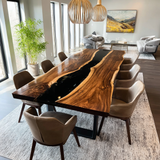
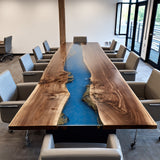
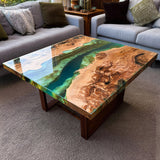
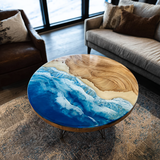

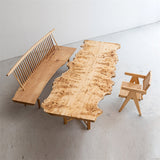



Noticed your table isn't level? Don’t worry—it’s a common issue, not a lost cause. Warping often happens due to the wood’s interaction with its environment. This guide will explain why it happens, how to prevent it, and the steps to restore stability. Let’s turn your concern into action.
THE REASON
A live-edge epoxy resin table is generally stable, but it can warp under these key conditions:
Significant humidity changes are the main cause.
-
Humidity changes cause wood to expand or contract, while epoxy stays stable. Rapid moisture loss or gain (e.g., near heaters or vents) can make the wood warp or twist against the epoxy.
-
Extreme or Direct Heat:
Placing the table in direct sunlight or near heat sources can cause uneven expansion of wood and epoxy, leading to stress and potential warping. Direct heat may also weaken the epoxy bond.
-
Structural or Build Issues:
Insufficient Support: A large table with inadequate leg or base support may sag over time.
THE WAY
-
Step 1: Turn the table upside down and place it completely flat on the floor. If possible, choose a hard, level surface.
-
Step 2: Cover the entire tabletop with a soft cotton cloth to protect the finish.
-
Step 3: Evenly place heavy, solid items—such as boxes or other sturdy objects—on top of the tabletop to add weight.
- Step 4: Leave the weight in place for 5–10 days. The consistent pressure may help the wood gradually relax and return to a flatter shape.
THE PREVENTION
Here’s a clearer, more polished version with smoother flow:
-
Recommended Humidity Levels:
Winter: Keep indoor humidity between 45%–55% to prevent excessive dryness caused by heating.
Summer: Use air conditioning or a dehumidifier to maintain humidity within the same 45%–55% range.
-
Daily Care Tips:
Avoid placing the table near heating or air-conditioning vents, or in direct sunlight.
Use coasters and tablecloths to protect the surface from moisture and sudden temperature changes.
Maintain the tabletop regularly with a suitable wood wax or conditioning oil.
Now that you understand why warping happens and how to prevent it, you’re ready to take action. Assess whether simple environmental adjustments will help or if hands-on repair is needed. Don’t let minor warping diminish your enjoyment—take the first step to prevent both your table and your peace of mind. Please feel free to contact us with any related questions.